All works → Paper
Paper
The Exact Matter-Contraction Non-Gaussian Amplitude: Four-Vertex Derivation and Conditional Large-Scale-Structure Mapping
The bounce program's core prediction: an exact primordial non-Gaussianity amplitude (f_NL = −35/16)
Abstract
A four-vertex derivation of the matter-contraction non-Gaussian amplitude under the manuscript's stated assumptions, followed by conditional large-scale-structure mappings. Published SPHEREx sensitivities and an in-house Fisher calculation are used as bounded forecasting diagnostics; they are not treated as mechanism-independent predictions or detections.
Result summary
- openfNL = -35/16 = -2.1875 under the stated background, gauge, and cubic-action assumptions
- openFour-vertex squeezed-limit derivation and committed symbolic cross-check agree
- openEq. 3 1/k² shape function fix (Wave 11) restores claim-derivation consistency
- openNormalization audit: 92% confidence via vertex-by-vertex Cai action
Figures
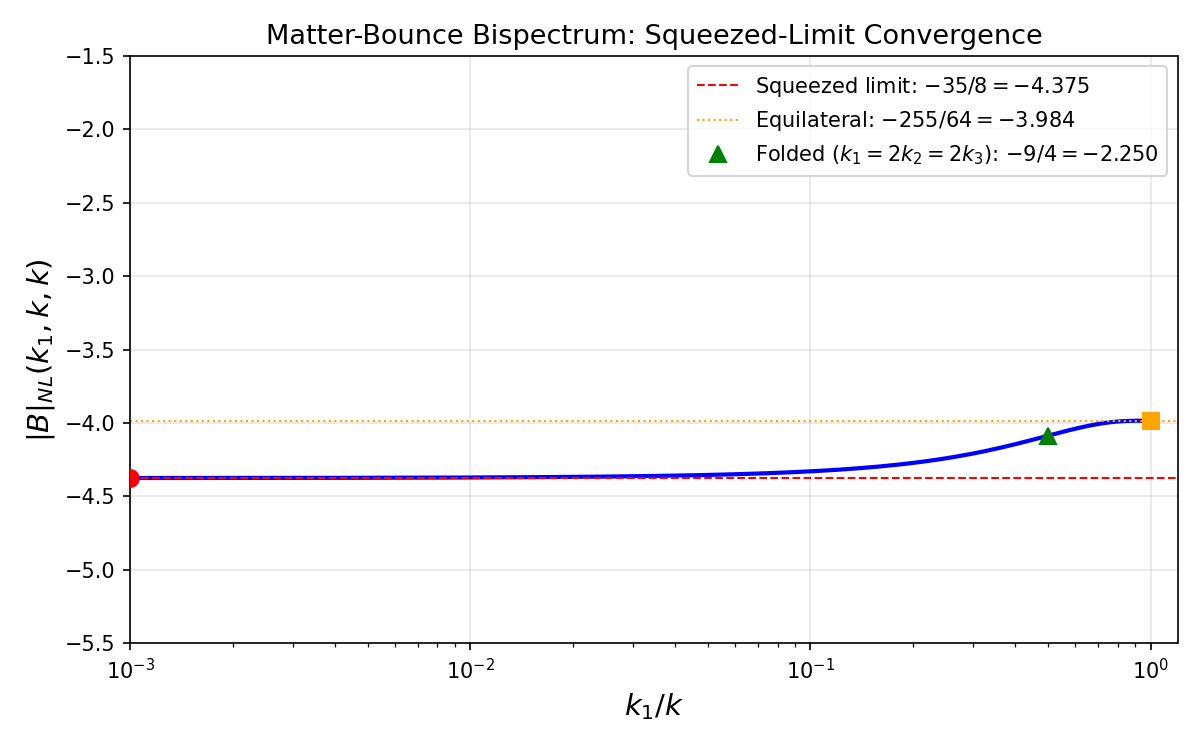
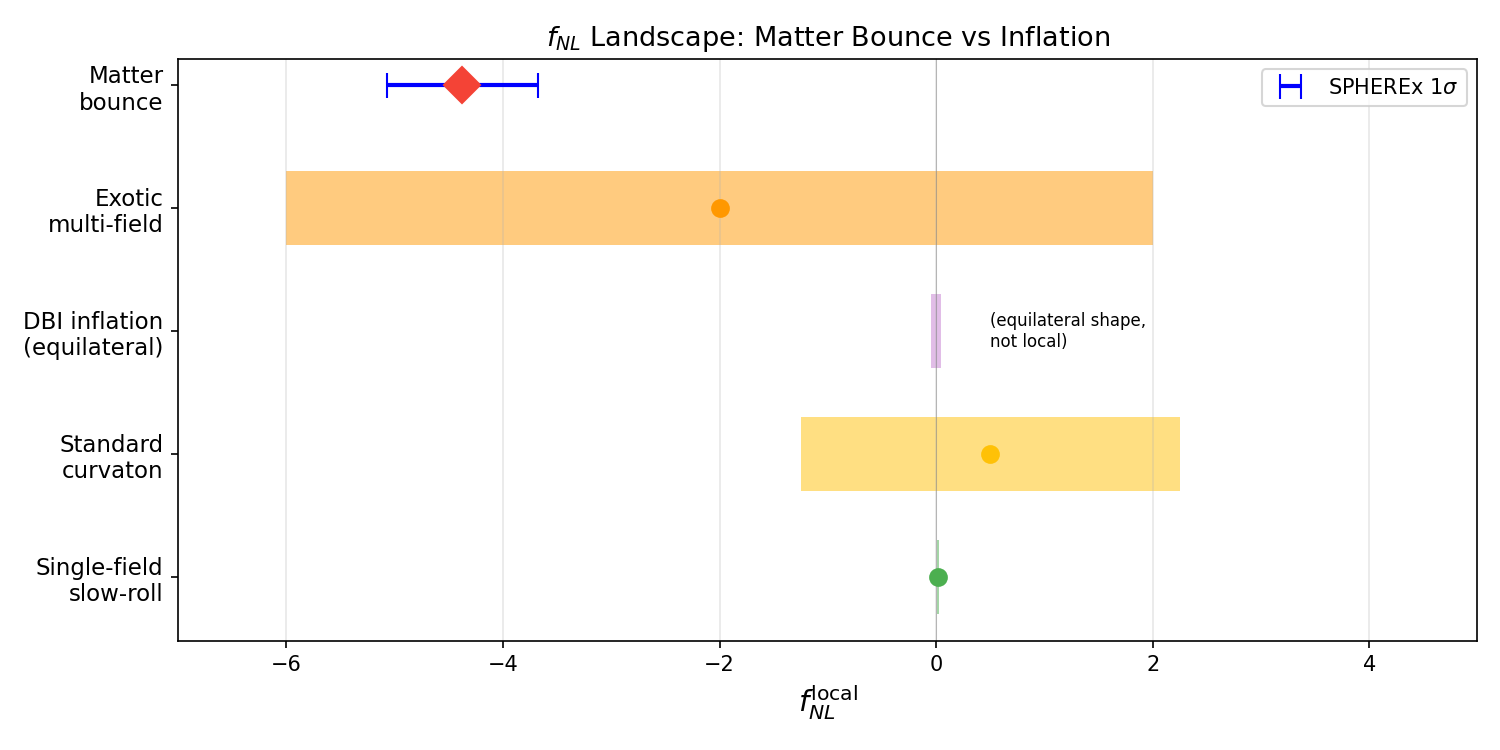
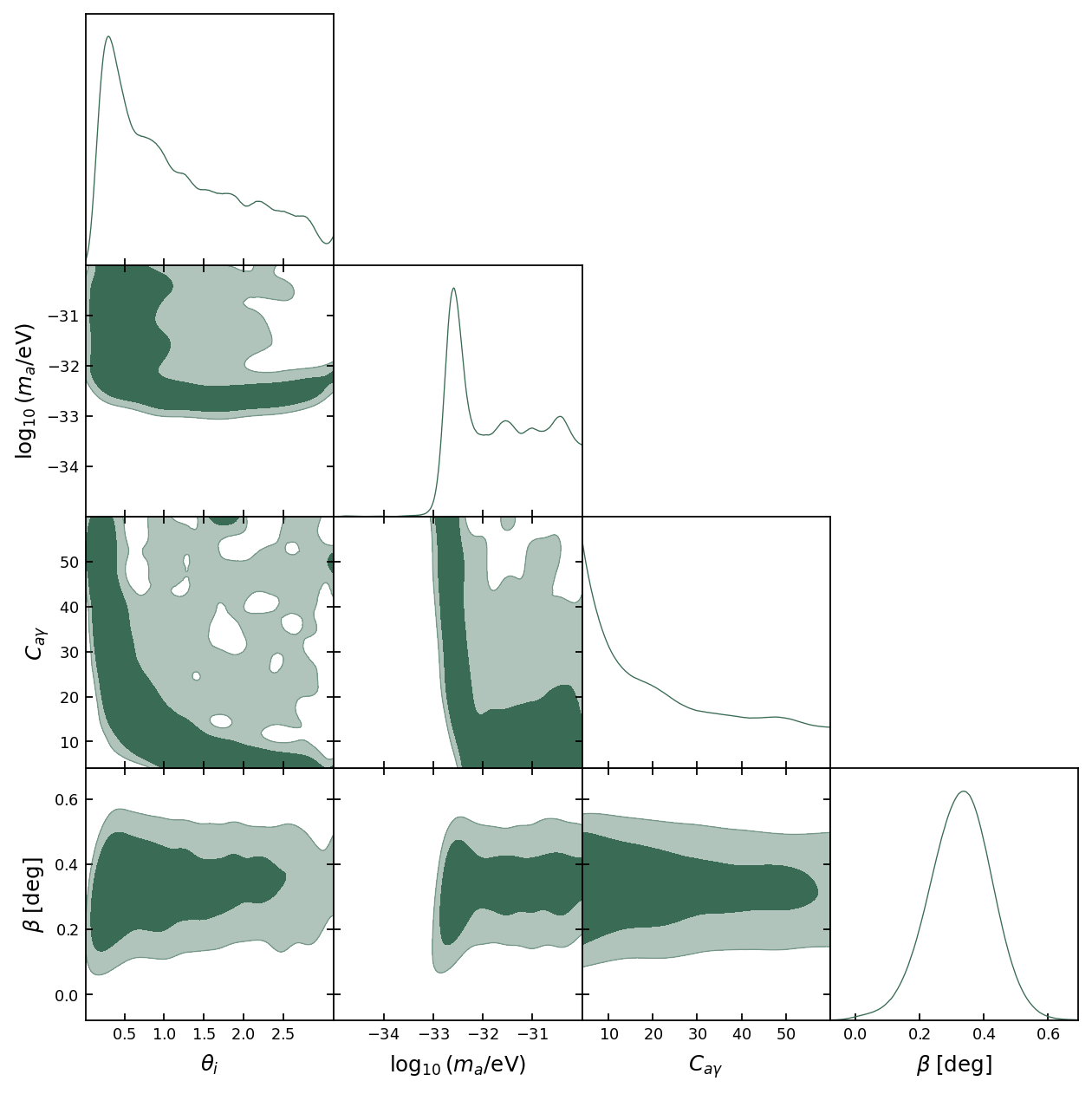
Candidate figures — validated analysis outputs not yet included in the draft.
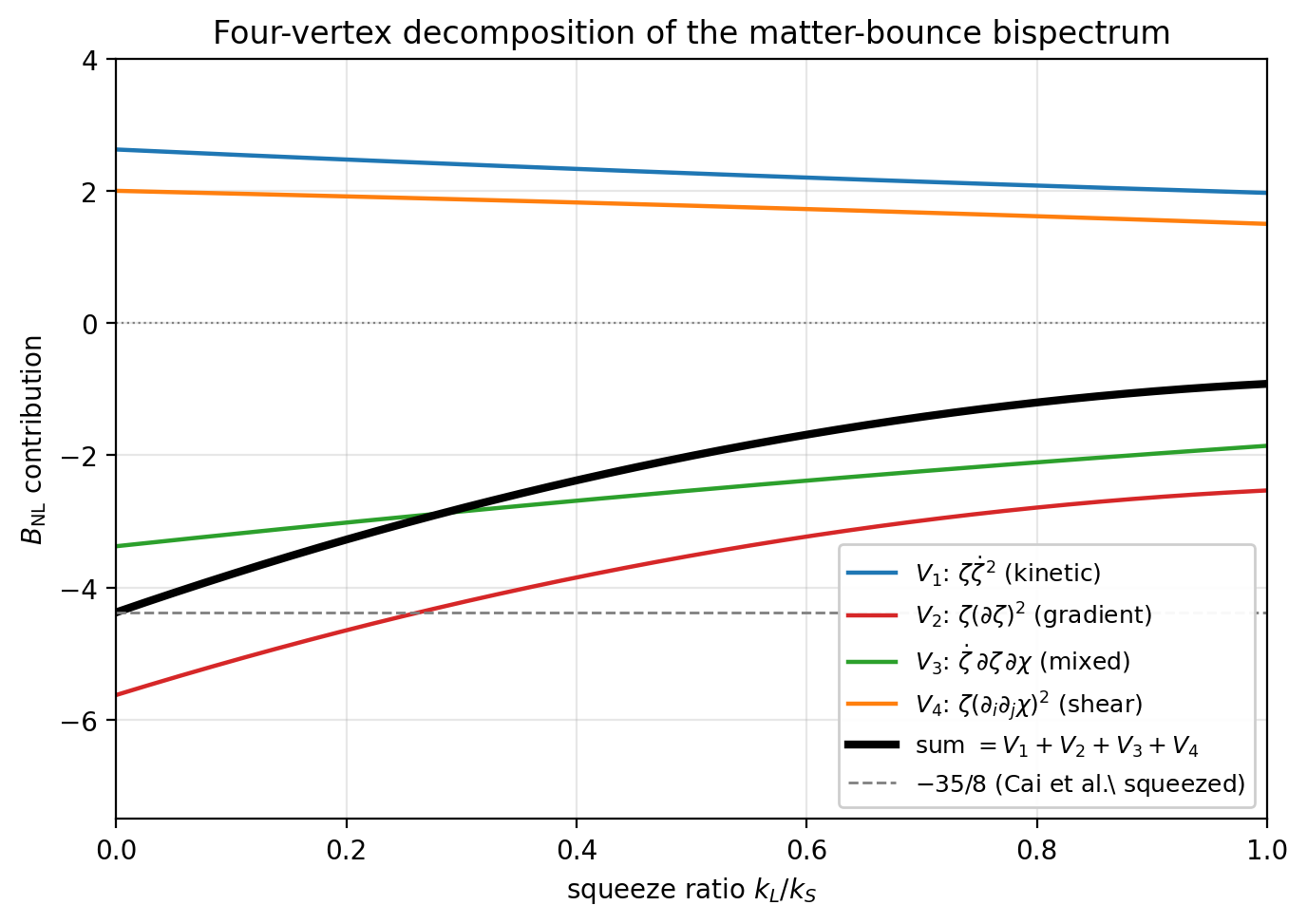
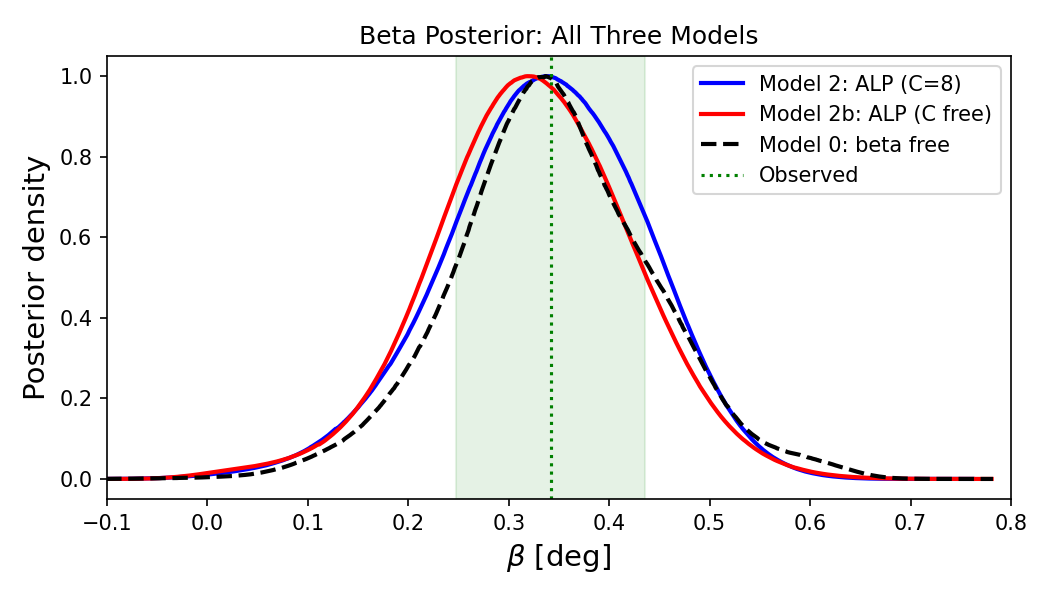
Readiness
0B / 0M / 0m / 0C open
Readiness is publication readiness only — science, evidence, review convergence, packaging, and Houston’s final sign-off. Venue and submission are tracked separately below, and never subtract from this number (directive P).
Publishing
Not part of readiness.
Review evidence (186 rounds)
Automated review is a gate on publication readiness, not a product. Full review timeline →
External peer review kit
Houston-driven manual round · paste prompt into any frontier LLM web UI with the PDF attachedOne click to copy a referee prompt scoped to this paper. One click to download the latest PDF. Paste both into Claude / GPT-5 / Gemini / Grok / Perplexity — return findings here and the autonomous cron will close them in the next bundled hard-fix wave.
preview prompt
You are an external referee for MNRAS / Physical Review D / JCAP (target journal depends on paper).

Attached: Paper 2 v1.7.130 — "The Exact Matter-Contraction Non-Gaussian Amplitude: Four-Vertex Derivation and Conditional Large-Scale-Structure Mapping"
Source: research/focused_paper_source_integration/02_full_draft.tex
PDF: PDF · 12 pp · v1.7.131 · updated Sep 22, 2026 · md5 b7ba55724042883ce6c27a29b5b56436 — R-CONFIRM exact-version board (Grok REJECT / Gemini MINOR / Claude opus MAJOR-REVISIONS) closed most genuinely-new-real findings by real edit; NOT yet a confirmed/converged board. Three ESSENTIAL scientific-framing findings remain open by design (see DISPOSITIONS/P2.md).

Read the FULL PDF end-to-end. Produce a referee report in MNRAS format with:

1. Recommendation: ACCEPT / MINOR REVISIONS / MAJOR REVISIONS / REJECT
2. BLOCKERS (must fix before publication) — list each with section/line + proposed fix
3. MAJORS (should fix) — same format
4. MINORS (polish) — same format
5. Strengths (>= 3 bullet points)
6. Specific scrutiny on:
   - Four-vertex f_NL = -35/16 derivation under stated assumptions
   - Committed symbolic and Fisher cross-checks
   - Conditional SPHEREx and large-scale-structure sensitivity mapping
   - Bounded final-hash confirmation and Houston PRD sign-off

CALIBRATION (do not burn findings on these known classes):
- The current date is June 2026. arXiv identifiers of the form 25xx.xxxxx and 26xx.xxxxx are VALID, already-published preprints — do not flag them as "future-dated" or "nonexistent". Verify a citation against arXiv/ADS before claiming it does not exist.
- Correction notes, retraction notices, and "an earlier version stated X" disclosures in the text are DELIBERATE transparency policy. Flag them only if their content is wrong, never for existing.
- Companion-paper citations marked "posted concurrently on arXiv" are deliberate placeholders; real arXiv IDs are inserted during the coordinated submission sequence.
- Explicitly labeled conservatism allowances, scaling estimates, ansatz/heuristic status labels, and disclosed queued follow-up computations are deliberate scoping, not oversights — flag only if the label itself is inaccurate.
- PDF text extraction can mangle math (square roots, fractions, superscripts). Before flagging "garbled" or "wrong" math, consider extraction artifacts; flag only what is visibly wrong in the rendered PDF.

VERDICT STANDARD (apply the SAME high bar a first-pass Physical Review D / MNRAS referee would — this is one of the most rigorous journals in the world):
- Assign each finding's severity (BLOCKER / MAJOR / MINOR) by your own independent referee judgment. Do NOT default to any tier, and do NOT soften a finding because the rest of the paper is strong. Do not echo this prompt's context.
- A reporting choice that headlines the more favorable of two numbers, an unstated assumption, an uncontrolled systematic, or an internal inconsistency IS a real finding — classify it honestly (MINOR at minimum), not as mere "style" or "opinion".
- Truth-audit any claim that seems off by checking it against the published .tex / on-disk artifacts before flagging (this only filters out genuine extraction artifacts — it does not lower the bar on real defects).
Reproduce this
Lineage
Lead Theory Paper · Matter-Contraction Non-Gaussianity. This work does not claim beyond its stated target and scope above.